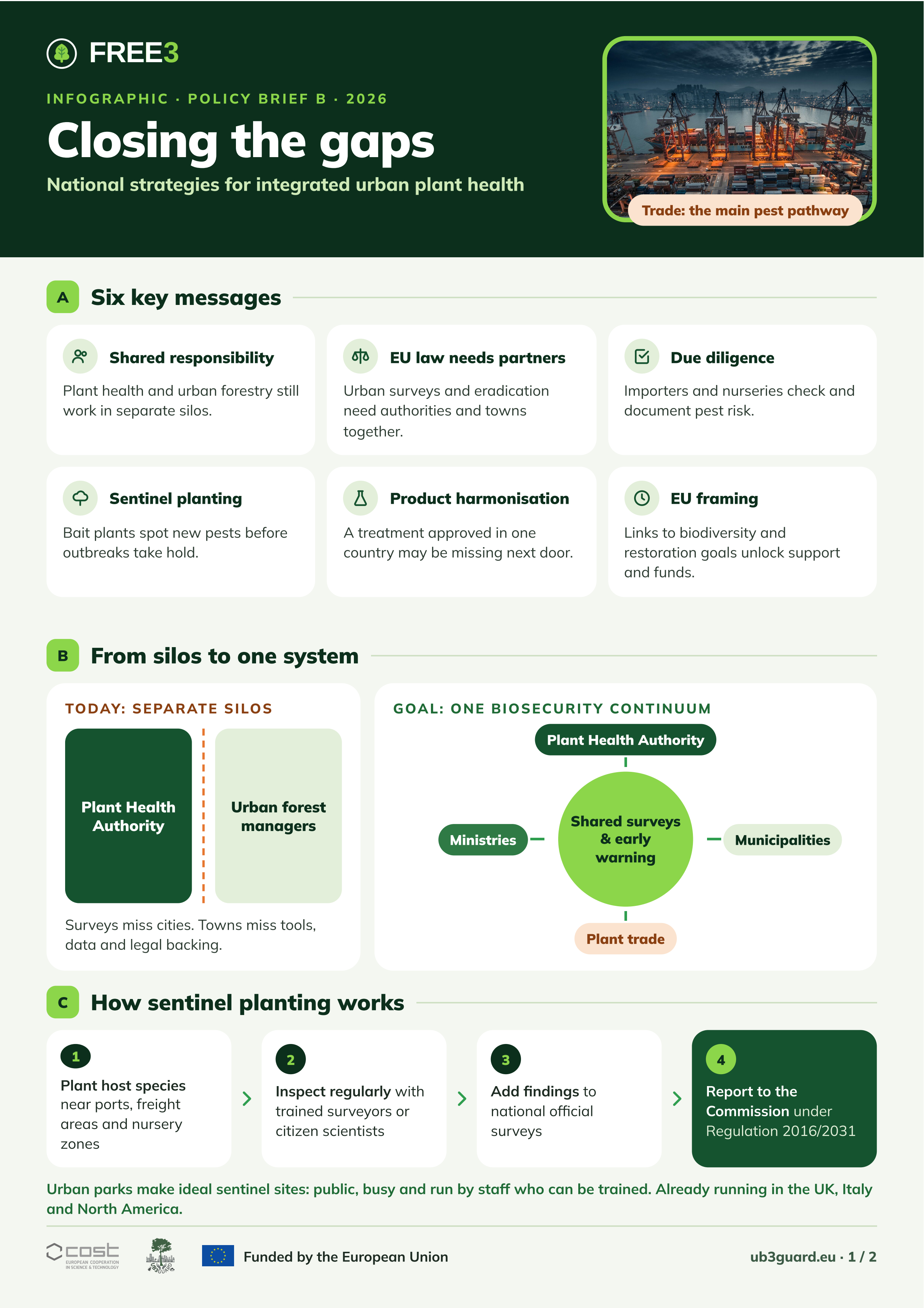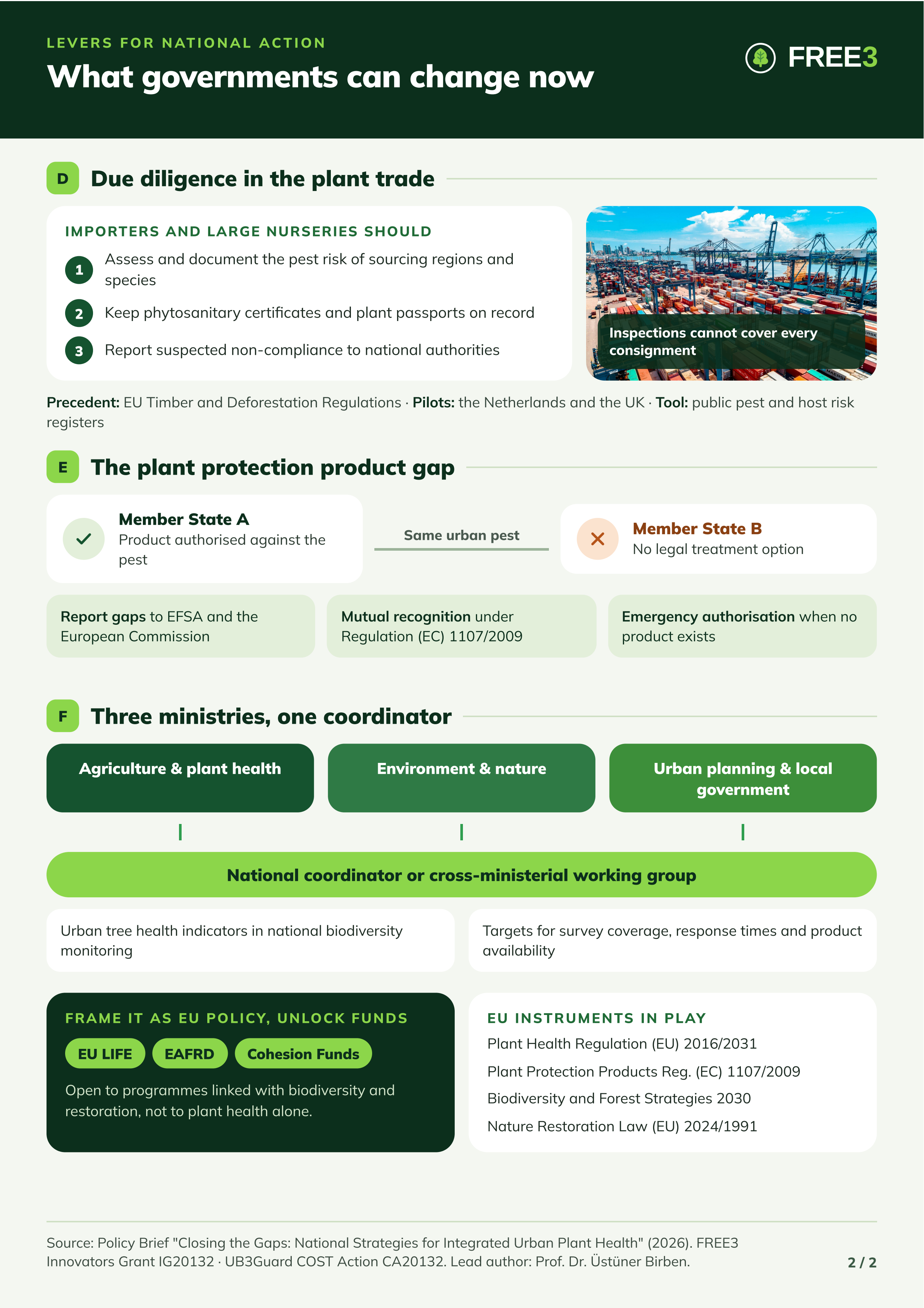
Plant health and urban forestry still operate in separate silos, leaving urban surveys and eradication efforts unsupported because current inspections cannot cover every consignment. To address this challenge, our FREE3 project has published a new infographic policy brief titled “Closing the Gaps: National Strategies for Integrated Urban Plant Health” (lead author: Prof. Dr. Üstüner Birben).
Key Highlights:
-
Shared Responsibility & EU Law: Plant health and urban forestry work in separate silos, and effective urban surveys and eradication require authorities and towns to act together.
-
Due Diligence & Sentinel Planting: Importers and nurseries must check and document pest risks, while bait plants and sentinel sites in urban parks can spot new pests before outbreaks take hold.
-
Levers for National Action: Governments can mandate due diligence in the plant trade, address product gaps across member states under Regulation (EC) 1107/2009, and unify agriculture, environment, and urban planning ministries under a single national coordinator.
-
EU Instruments and Funding: Leveraging frameworks like the Plant Health Regulation (EU) 2016/2031 and the Nature Restoration Law (EU) 2024/1991 helps unlock support and funds from EU LIFE, EAFRD, and Cohesion Funds.
To read the full policy brief, read here: Policy Brief National Strategies